Best Pickleball Paddles to Boost Your Game: Top 21 (2025)
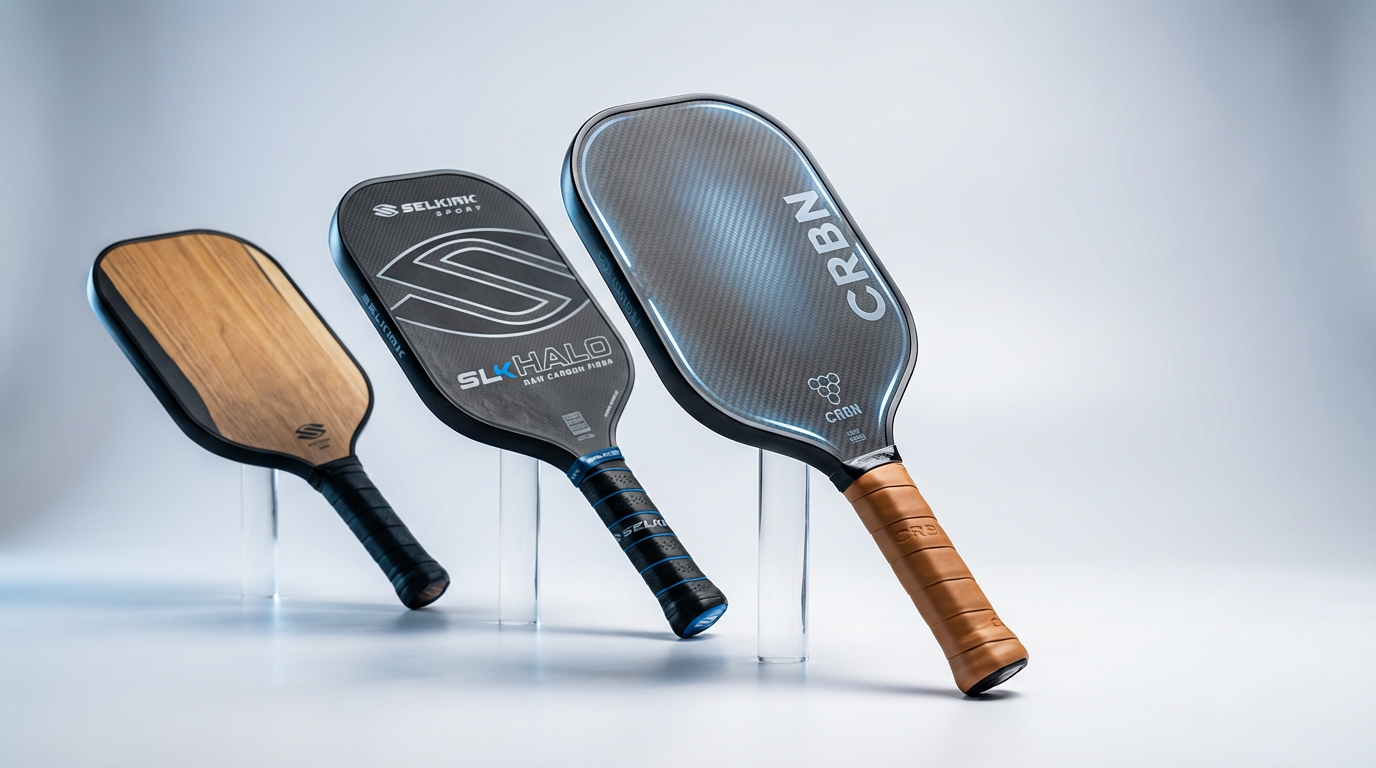
Pickleball's explosive growth has flooded the market with paddles at every price point—leaving you confused about what actually matters and where your money really goes. This guide cuts through the noise by breaking down the true performance gains at each price tier, so you can stop guessing and start playing better. We've analyzed paddle construction materials, core technologies, and real-world performance data to show you exactly which features deliver results for your skill level. You'll discover the sweet spot where you get 80% of professional performance at half the cost—no hype, just honest recommendations.
🚀 Get FREE 2-Day Shipping with Amazon Prime
Try Amazon Prime FREE for 30 days! Enjoy fast, free delivery on millions of items, plus exclusive access to movies, TV shows, music, and more.
Start Your Free Trial →No commitment. Cancel anytime during the trial.
Our Top Picks
Budget Foundations ($28–$65)
Entry-level paddles priced $28.48–$65.00 featuring fiberglass or basic carbon construction with 16mm honeycomb cores. ROI: Gain USAPA approval, reliable control, and durable construction for casual play and beginners learning fundamentals—ideal for testing commitment before investing in advanced technology.
Pickleball Paddle Carbon Fiber
$59.99 (45% off) • 4.8/5.0 ⭐ (1,160 reviews)

Overview:
A carbon fiber paddle with a 16mm polymer core designed for beginners and casual players seeking reliable control and spin without premium pricing.
Pros:
- Premium Toray T700SC carbon fiber construction with 4-directional weave provides durability and minimizes dead spots across the striking surface
- Extended handle accommodates two-handed backhand players while improving leverage and swing power
- Includes useful accessories (grip tape, overgrip, cleaning eraser) that typically cost extra elsewhere
Cons:
- Carbon fiber at this price point uses basic construction compared to mid-range paddles ($100–$250), limiting advanced spin and power potential
- 16mm polymer core is standard but less responsive than thicker or premium core materials available at higher price tiers
Best For:
Beginners testing their commitment to pickleball or recreational players wanting a durable, USAPA-approved paddle that delivers solid fundamentals without the investment of advanced technology.
Quick Comparison Table
HEAD Radical Elite Pickleball Paddle
$42.46 (15% off) • 4.6/5.0 ⭐ (1,778 reviews)

Overview: A fiberglass paddle built for intermediate players transitioning from beginner equipment, offering reliable control and power at an entry-level price point.
Pros:
- Lightweight 8.1 oz design with 13mm polypropylene core reduces arm fatigue during extended play
- Fiberglass surface delivers consistent feel and adequate power for recreational and club-level competition
- Ergo grip minimizes vibration and provides comfortable handling for developing technique
Cons:
- Fiberglass construction lacks the durability and performance longevity of graphite alternatives at similar price points
- 13mm core thickness sits below modern standards (16mm+), limiting sweet spot size and forgiveness on off-center hits
Best For: Intermediate players ready to upgrade from basic paddles who want proven HEAD brand reliability without committing to premium pricing—ideal for testing skill progression before investing in advanced materials.
Pickleball Paddles Set with Fiberglass Surface
$28.48 (43% off) • 4.8/5.0 ⭐ (5,030 reviews)

Overview
A USAPA-approved fiberglass paddle set designed for beginners and casual players testing their commitment to the sport without premium investment.
Pros
- USAPA tournament approval enables competitive play immediately
- Polypropylene honeycomb core reduces vibration for stable, predictable ball contact
- Fiberglass surface delivers solid rotational performance at entry-level price point
Cons
- Fiberglass construction lacks the responsiveness and power of carbon or graphite alternatives
- Heavier than advanced materials, potentially causing arm fatigue during extended play
Best For
Beginners and recreational players validating long-term interest before upgrading to mid-range paddles—delivers reliable control and durability for learning fundamentals at minimal financial risk.
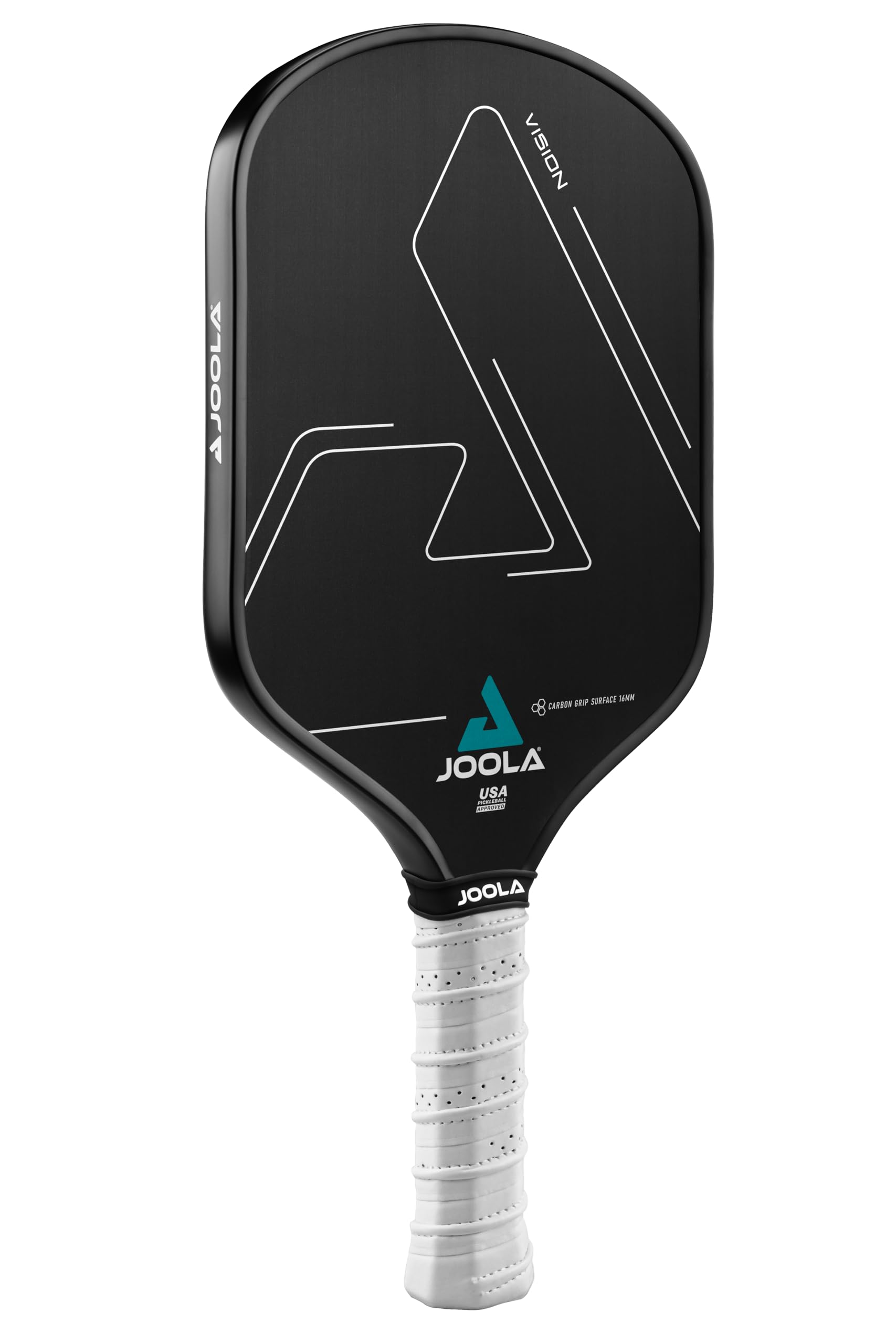
Joola Vision Pickleball Paddle
$65.00 (54% off) • 4.7/5.0 ⭐ (504 reviews)
Overview
A carbon-faced, 16mm honeycomb paddle positioned as the official equipment of pro player Ben Johns, designed to deliver spin and control at the entry-level price point.
Pros
- Carbon Grip Surface (CGS) technology provides measurably enhanced spin on serves and dinks compared to standard fiberglass paddles
- 16mm Response polymer core reduces vibration while maintaining responsive feel for better shot feedback
- Aero Curve head design increases swing speed with less drag, making it easier for beginners to generate power
Cons
- Carbon-faced construction at this price point may show wear faster than graphite alternatives in the mid-range tier
- Sure-Grip perforated handle is effective but requires regular cleaning in humid conditions to maintain anti-slip performance
Best For
Casual players ready to upgrade from wood or ultra-budget paddles who want proven spin technology and pro-endorsed design without committing to premium pricing—ideal for testing if advanced surface features genuinely improve your game.
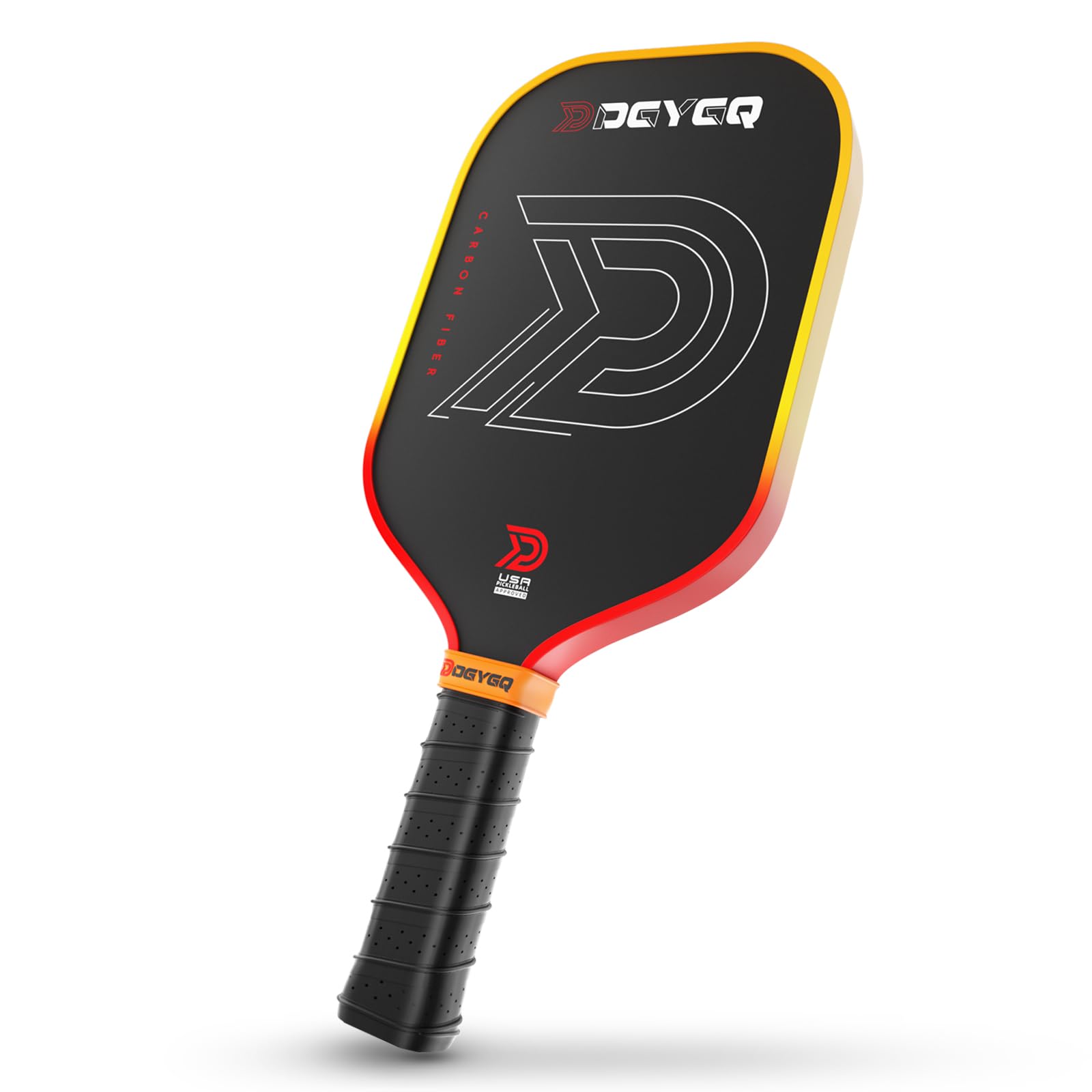
Pickleball Paddles Carbon Fiber Professional
$50.98 (40% off) • 4.8/5.0 ⭐ (1,312 reviews)
Overview
A carbon fiber paddle at budget pricing designed for beginners and casual players seeking durability and basic performance without premium investment.
Pros
- Lightweight 8-ounce design enables quick responsiveness and reduces arm fatigue during extended play
- 16mm honeycomb core with ABS edges provides reliable shock absorption for controlled, consistent shots
- Carbon fiber construction at $50.98 offers solid durability for recreational play at an accessible entry price point
Cons
- Extended handle benefits two-handed backhand players but may feel awkward for traditional single-handed grip players
- Carbon fiber at this price tier typically lacks the refinement and spin potential of mid-range paddles ($100+)
Best For
Beginners and casual players testing commitment to the sport or upgrading from wood paddles—this paddle delivers USAPA-approved fundamentals and durability without overcommitting financially.
ONIX Graphite MOD Z5 Pickleball Paddle
$45.63 (30% off) • 4.6/5.0 ⭐ (5,655 reviews)

Overview
A mid-weight graphite paddle with NOMEX honeycomb core and tennis-style handle designed for beginners and intermediate players seeking tournament-approved equipment at an accessible price point.
Pros
- USAPA/USA Pickleball approved for official tournament play, removing equipment barriers for competitive newcomers
- Balanced 7.5–8.2 oz weight delivers control without sacrificing maneuverability, ideal for developing consistent fundamentals
- 4.6/5 rating across 5,655 reviews demonstrates proven reliability and real-world performance validation
Cons
- NOMEX core provides less pop than premium carbon or polymer alternatives, limiting power generation for aggressive players
- Entry-level graphite construction won't match durability or feel refinement of paddles in $100+ range
Best For
Casual players and tournament-aspiring beginners testing long-term commitment to pickleball—this paddle delivers USAPA compliance and reliable control without premium pricing, maximizing ROI before upgrading to advanced technology.
Mid-Range Performance ($65–$159)
Advanced paddles priced $65.00–$159.00 with T700 raw carbon fiber faces, enhanced spin technology, and specialized core designs (EdgeFusion, Dynamic Fusion, TruFoam). ROI: Achieve tournament-level consistency, expanded sweet spots (16–16.5mm cores), and professional-grade spin control—justified for intermediate to advanced players seeking competitive edge without premium pricing.
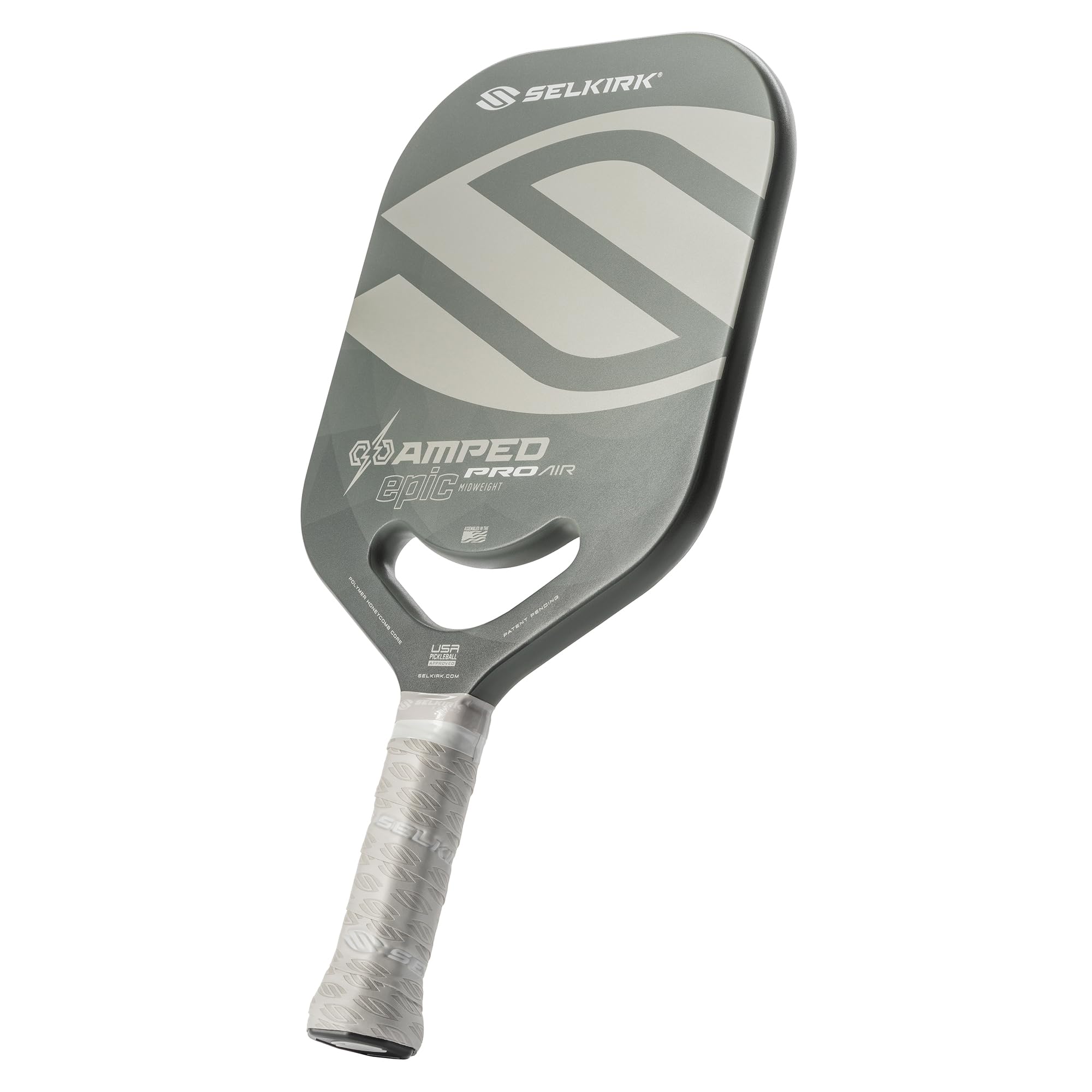
Selkirk Sport Amped Pickleball Paddles
$67.99 • 4.5/5.0 ⭐ (1,688 reviews)
Overview
A mid-range fiberglass paddle engineered for intermediate players seeking tournament-level control and consistency without premium pricing.
Pros
- FiberFlex+ face and micro-textured spin coating deliver measurable spin control and touch comparable to higher-priced paddles
- X5 polypropylene core (16mm) expands sweet spot for improved consistency on off-center hits
- USA assembly with lifetime warranty provides durability confidence at $67.99—strong value for the performance tier
Cons
- Fiberglass construction offers less raw power than carbon fiber alternatives in the same price range
- Limited edge guard (EdgeSentry) may not match durability of premium models under heavy competitive use
Best For
Intermediate players ready to upgrade from beginner paddles who prioritize control and spin over power, maximizing performance gains without stepping into premium pricing ($150+).
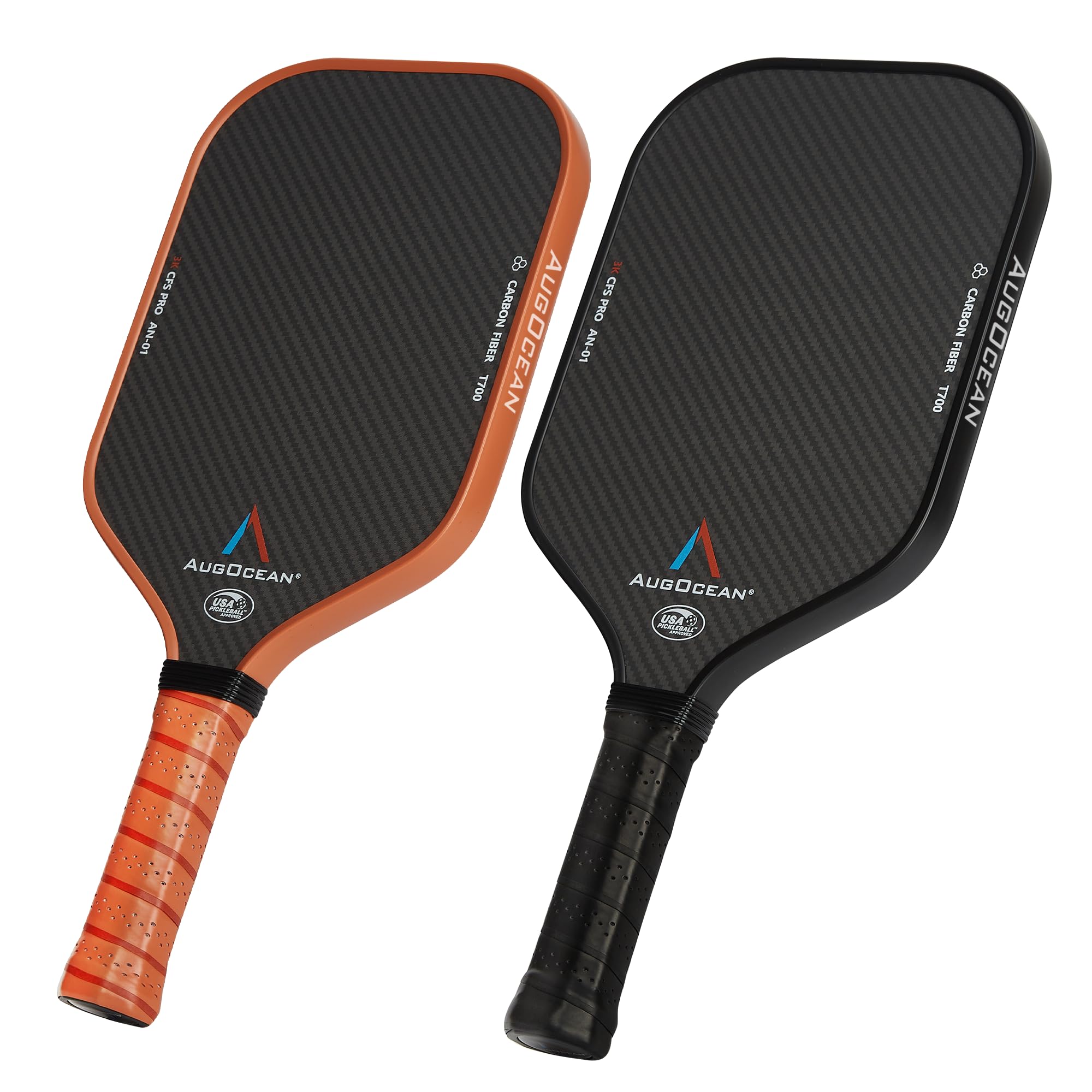
Pickleball Paddles Set of 2 Carbon Fiber
$89.99 (40% off) • 4.9/5.0 ⭐ (172 reviews)
Overview
A dual-paddle set featuring T700 raw carbon fiber construction with 16mm honeycomb cores, designed for intermediate to advanced players seeking tournament-level performance at mid-range pricing.
Pros
- 1.6mm T700 carbon fiber with 3K raw surface delivers measurable spin enhancement and superior durability compared to graphite or lower-grade carbon alternatives
- USAPA-approved construction meets competitive standards; includes 2 covers, 4 balls, and 6 grip tape options—excellent bundle value at $89.99
- 16mm core provides reliable shock absorption and expanded sweet spot for consistent play across skill levels
Cons
- Generic brand (AUGOCEAN) lacks established reputation in competitive pickleball circles compared to recognized manufacturers
- Limited information on edge guard durability or long-term wear patterns on the carbon fiber surface
Best For
Intermediate players upgrading from beginner equipment who want tournament-ready specs and spin control without premium pricing—solid ROI for competitive improvement on a budget.
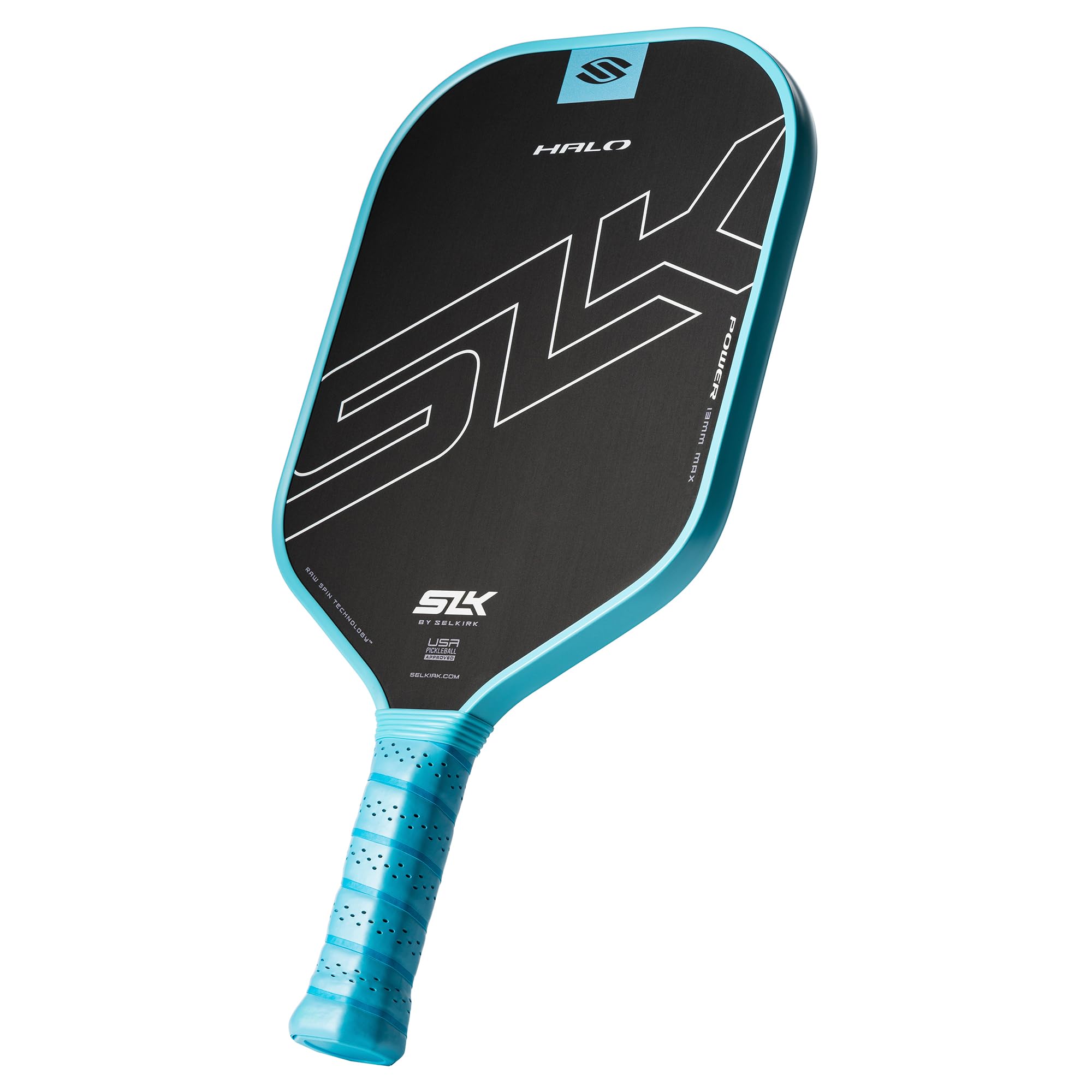
Selkirk Sport SLK Halo Pickleball Paddle
$99.99 • 4.6/5.0 ⭐ (1,168 reviews)
Overview
A mid-range carbon fiber paddle designed for intermediate players seeking tournament-level control and spin without premium pricing.
Pros
- T700 Raw Carbon Fiber face with 16mm Rev-Core polymer core delivers tournament-grade spin and a large sweet spot for consistent play
- Three construction options (Raw Carbon, 18k Ultraweave, Aramid Linkweave) allow customization for power vs. control preferences
- 7.7–8.0 oz weight range with padded faux leather grip provides comfort during extended matches
Cons
- Multiple material options may overwhelm beginners deciding between performance tiers
- Limited edge protection details compared to premium competitors at similar price points
Best For
Intermediate to advanced players ready to upgrade from beginner paddles and want measurable improvements in spin control and consistency without stepping into the $250+ premium tier.
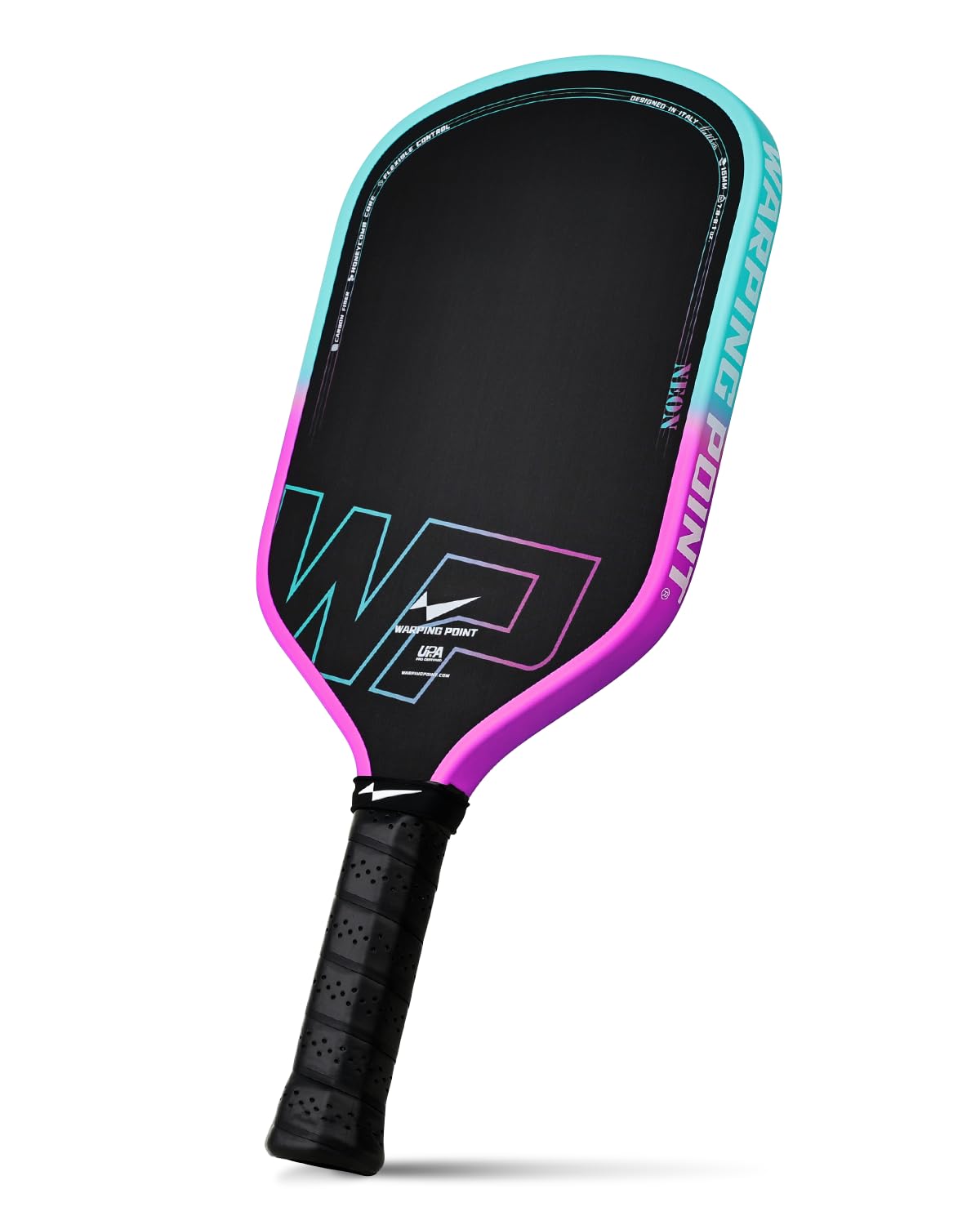
Warping Point Neon Gen 3 Pickleball Paddle
$79.99 (20% off) • 4.6/5.0 ⭐ (53 reviews)
Overview
A tournament-approved mid-range paddle combining T700 raw carbon fiber construction with a 16mm EdgeFusion core, designed for intermediate to advanced players seeking competitive performance without premium pricing.
Pros
- UPA-A certified for sanctioned tournament play with verified build quality and consistency standards
- 16mm EdgeFusion core with high-density EVA perimeter expands sweet spot and reduces edge mishits
- Triple-layer T700 carbon fiber with textured finish delivers measurable spin control and consistent touch across forehand, backhand, and reset shots
Cons
- At $79.99, positioned at budget tier—lacks premium materials (graphite upgrades) found in higher-priced competitors
- 53 reviews is modest sample size compared to established market leaders with 500+ reviews
Best For
Intermediate players ready to upgrade from beginner paddles and competing in local leagues or tournaments who want tournament-level consistency and expanded sweet spot without spending $150+.
CPX Pro Carbon Fiber Pickleball Paddle
$99.97 • 4.6/5.0 ⭐ (488 reviews)
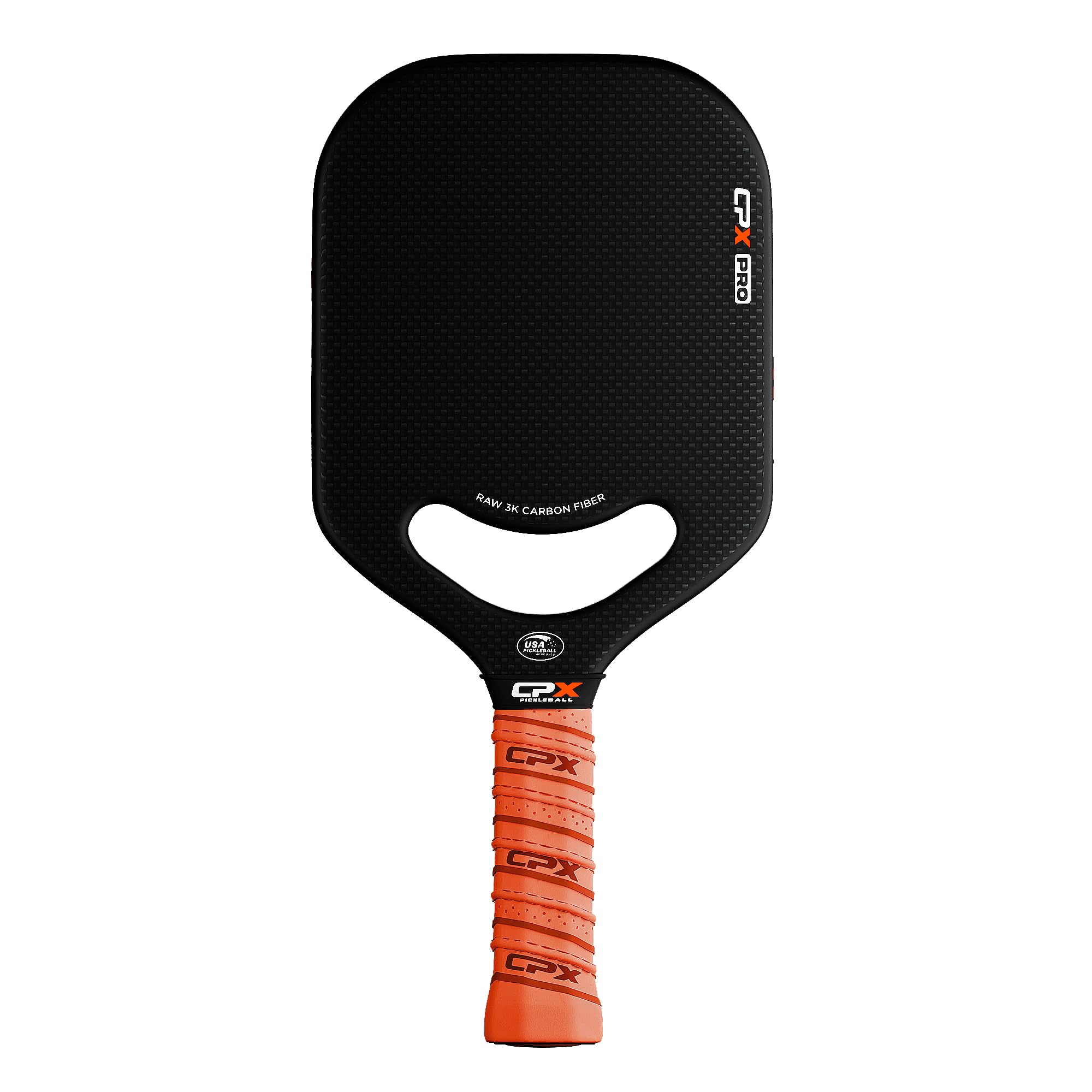
Overview: A mid-range carbon fiber paddle designed for intermediate players seeking tournament-level performance without premium pricing, featuring a 19mm honeycomb core and edgeless design for expanded sweet spot.
Pros:
- T700 raw carbon fiber face delivers professional-grade spin control and shot consistency
- 235-gram weight offers optimal balance between power and maneuverability for extended play
- 19mm core expands sweet spot compared to standard 16mm paddles, reducing mishits
Cons:
- Matte finish requires regular maintenance to prevent dirt buildup and maintain grip texture
- Tennis-style grip may need customization for players preferring traditional pickleball grip sizes
Best For: Intermediate players ready to upgrade from beginner paddles who want measurable improvement in spin and consistency without crossing into premium pricing ($250+).
Kevlar Pickleball Paddle Carbon Fiber
$159.00 • 4.9/5.0 ⭐ (24 reviews)
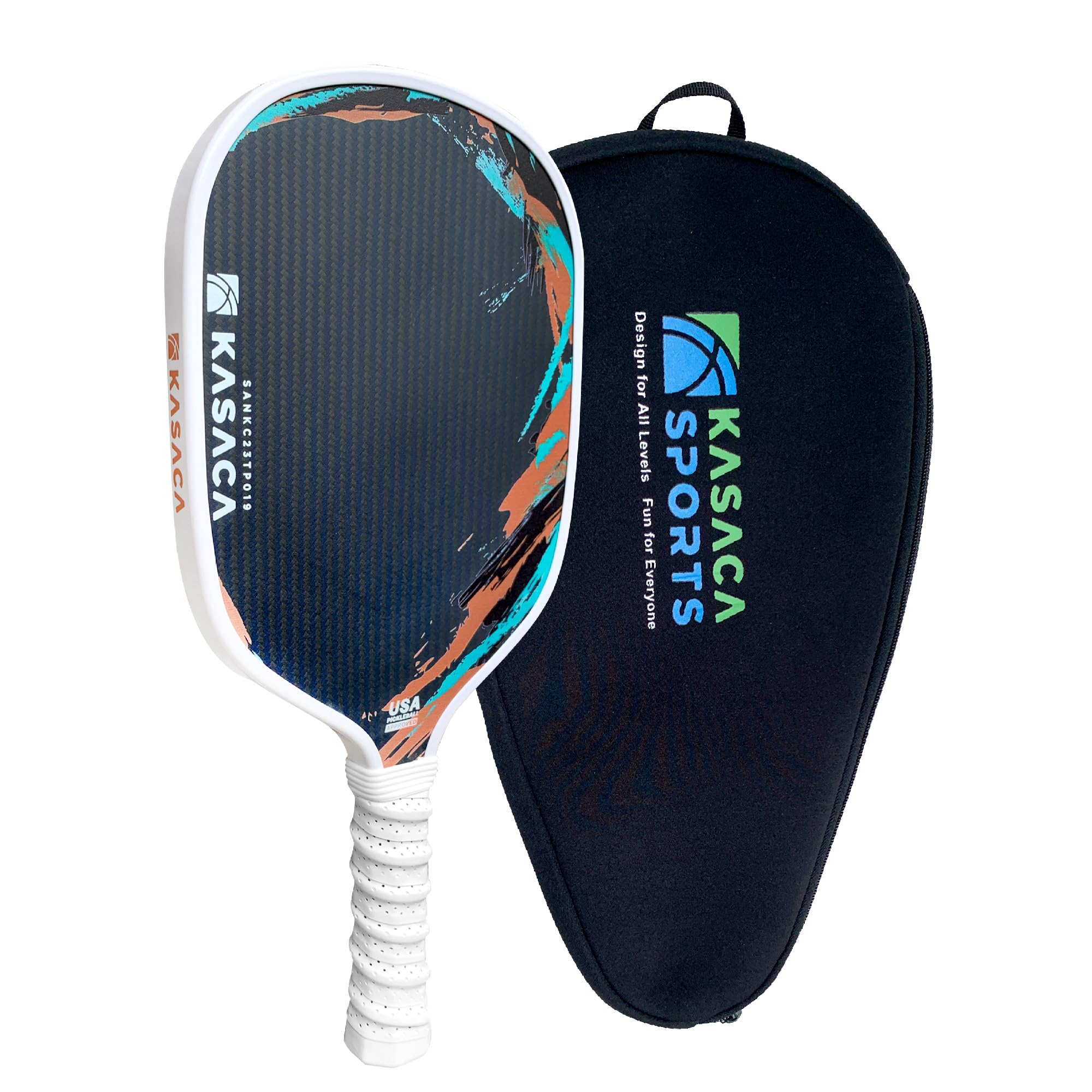
Overview: A mid-range thermoformed carbon fiber paddle featuring Kevlar surfacing and a 16mm EVA foam core, designed for intermediate-to-advanced players seeking tournament-level consistency without premium pricing.
Pros:
- 45° cross-woven T700 carbon construction expands sweet spot and resists torque on off-center shots
- Kevlar surface delivers measurable spin control and soft touch at net while maintaining power
- 16mm thermoformed core with honeycomb-EVA hybrid reduces vibration for stable, predictable feel across varied swing speeds
Cons:
- $159 price point sits at category ceiling; minimal performance gap versus $100–$130 alternatives may not justify cost for casual players
- Thermoformed construction offers durability but lacks customization options available in higher-end paddles
Best For: Intermediate players ready to invest in competitive consistency and spin control without stepping into premium territory—solid ROI for tournament preparation.
Selkirk Sport SLK Pickleball Paddles Set
$89.99 (31% off) • 4.6/5.0 ⭐ (4,295 reviews)

Overview: A matched pair of mid-range carbon fiber paddles featuring raw spin technology and honeycomb cores, designed for intermediate players seeking tournament-level consistency without premium pricing.
Pros:
- Raw carbon fiber faces with textured surface deliver measurable spin enhancement and improved ball control for advanced shot placement
- Rev-Control honeycomb core expands sweet spot to 16mm+, reducing mishits on off-center strikes
- Balanced 8 oz midweight design provides stability for both casual and competitive play at $89.99 for two paddles
Cons:
- Set bundle limits customization; players may prefer different paddle weights or grip sizes for individual preference
- Raw carbon fiber requires more maintenance than composite alternatives to preserve spin texture longevity
Best For: Intermediate players upgrading from beginner equipment who want tournament-ready performance and spin control without jumping to premium pricing—excellent ROI for competitive improvement on a budget.
Selkirk Sport SLK Halo Pickleball Paddle
$99.99 • 4.6/5.0 ⭐ (1,168 reviews)
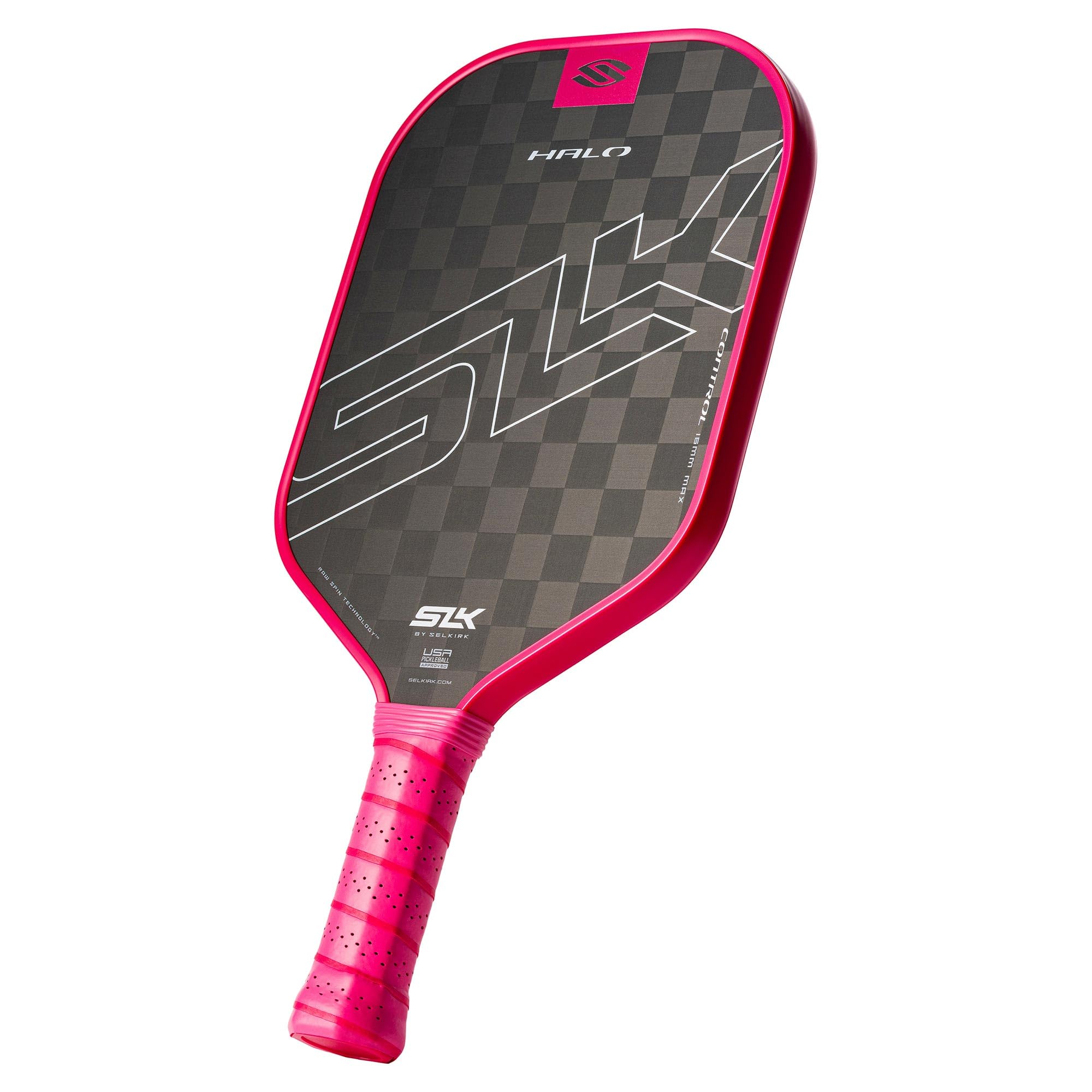
Overview
A mid-range carbon fiber paddle featuring a 16mm core and T700 raw carbon face, designed for intermediate players seeking tournament-level control and spin without premium pricing.
Pros
- T700 raw carbon fiber face with Raw Spin Technology delivers measurable spin control comparable to paddles $50+ more expensive
- 16mm REV-Core polymer core with MAX shape provides a large, forgiving sweet spot for consistent shot placement
- Cushioned faux leather grip and balanced 7.7–8.0 oz weight reduce fatigue during extended play sessions
Cons
- At $99.99, it sits at the budget ceiling—only $10–15 below entry-level premium options with additional features
- Three material variants (T700, 18k Ultraweave, Aramid) may create decision paralysis for players unfamiliar with carbon fiber grades
Best For
Intermediate players ready to upgrade from beginner paddles who want competitive-grade spin and control without stretching into the premium tier; strong ROI for serious recreational and tournament-focused players.
JOOLA Professional Pickleball Paddles
$109.99 (45% off) • 4.4/5.0 ⭐ (1,054 reviews)

Overview
A mid-range carbon fiber paddle endorsed by world #1 player Ben Johns, featuring charged surface technology designed for intermediate to advanced players seeking tournament-level performance without premium pricing.
Pros
- Charged Carbon Surface delivers crisp feedback and energy return with noticeably poppier response compared to standard composite paddles
- Fully encased carbon fiber construction provides durability and consistency across extended play sessions
- 16.5mm sweet spot and optimized shape balance power and control, ideal for transitioning from recreational to competitive play
Cons
- At $109.99, positioned at the upper end of mid-range; minimal performance advantage over $75–$85 alternatives for casual players
- Ben Johns endorsement drives brand premium—similar specs available from competitors at lower price points
Best For
Intermediate players ready to invest in tournament-level consistency and spin control without jumping to premium ($250+) pricing, offering measurable ROI through expanded sweet spot and professional-grade construction.
Nightblade Raw Carbon Fiber Pickleball Paddle
$118.49 (46% off) • 4.6/5.0 ⭐ (76 reviews)
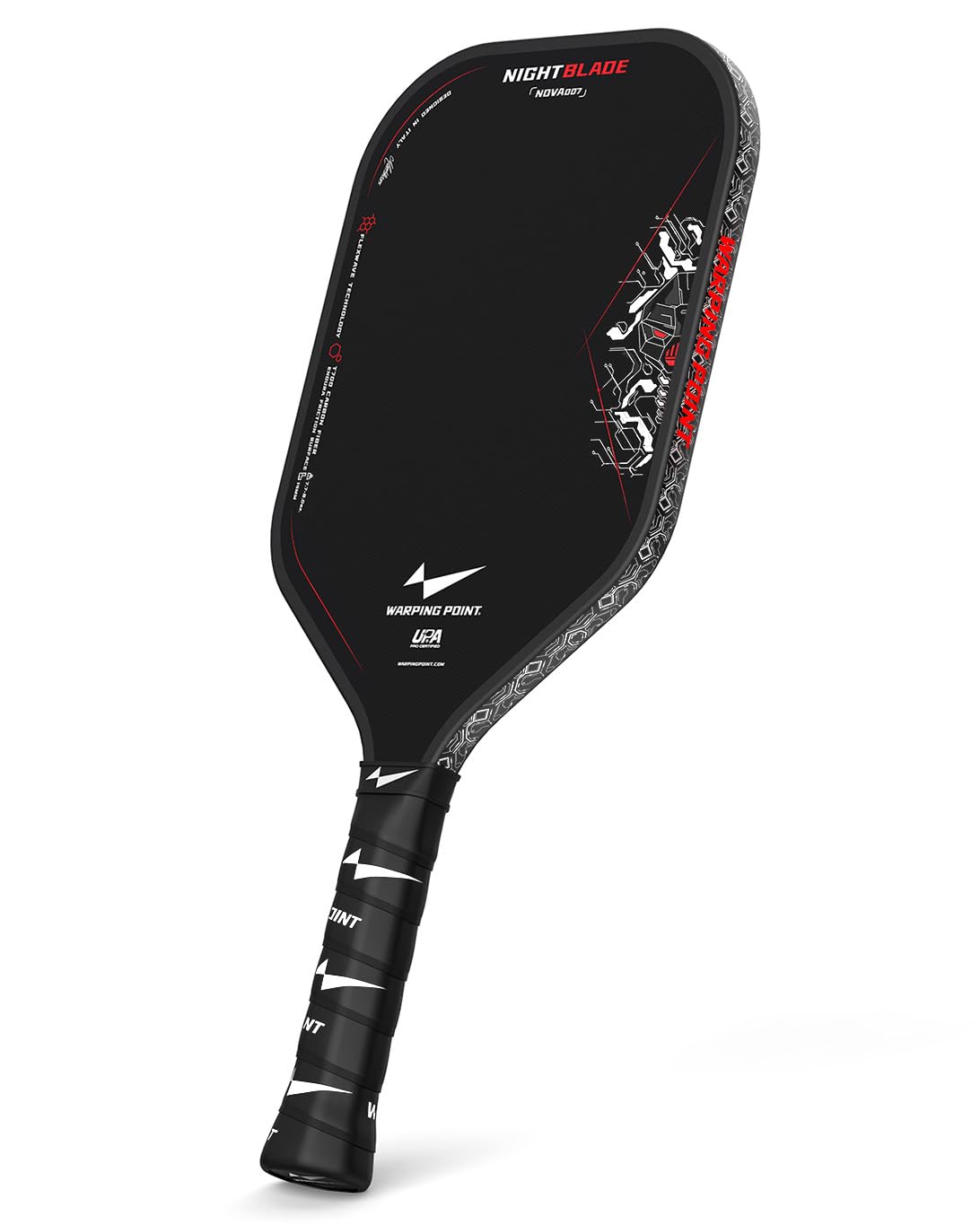
Overview
A tournament-certified mid-range paddle engineered for intermediate-to-advanced players seeking spin control and fast-paced counterattack capability, with a 16mm core and extended handle designed for two-handed backhands.
Pros
- Dual USAPA/UPA-A certification ensures tournament legality and validates performance standards
- Endura Friction Surface (T700 carbon + Teflon) delivers measurable spin enhancement with extended dwell time
- 5.5" long handle with 4.25" grip circumference accommodates two-handed techniques and improves stability
Cons
- $118.49 price point sits at the higher end of mid-range; marginal performance gains over $80–$90 alternatives may not justify cost for casual players
- Limited independent testing data; relies heavily on endorsements rather than third-party comparisons
Best For
Intermediate players ready to invest in competitive consistency and spin control without jumping to premium pricing—ideal for those upgrading from budget paddles and seeking tournament-ready equipment with measurable ROI.
Premium Elite ($160–$280)
Professional-grade paddles priced $160.99–$279.99 featuring proprietary core innovations (TruFoam Genesis, Kevlar surfaces, titanium mesh layers), 18+ months of R&D, and dual certifications (USAPA/UPA-A). ROI: Experience zero break-in inconsistency, maximum dwell time, and elite-level spin/power dynamics—justified for competitive players and pros demanding peak performance and durability across tournament play.
CRBN X Series Power Pickleball Paddle
$160.99 (30% off) • 4.6/5.0 ⭐ (446 reviews)

Overview
A professional-grade carbon fiber paddle engineered for competitive players seeking maximum spin and consistency without extensive break-in periods.
Pros
- Unibody construction eliminates weak neck joints, improving durability and responsiveness compared to traditional attached-handle designs
- 16mm foam-injected core with expanded sweet spot reduces vibration and delivers measurable shot consistency improvements
- USAPA-approved with proven tournament-level performance; 4.6/5 rating from 446 reviews validates real-world reliability
Cons
- $160.99 price point sits at premium tier entry—intermediate players may not recoup performance gains to justify the cost
- 7.8–8.1 oz weight falls on the heavier side; lighter alternatives exist for players prioritizing maneuverability over power
Best For
Competitive and tournament players ready to invest in zero break-in inconsistency and elite spin/power dynamics that justify mid-to-premium pricing for measurable performance ROI.
Selkirk Sport SLK ERA Power Pickleball Paddle
$199.99 • 4.6/5.0 ⭐ (93 reviews)
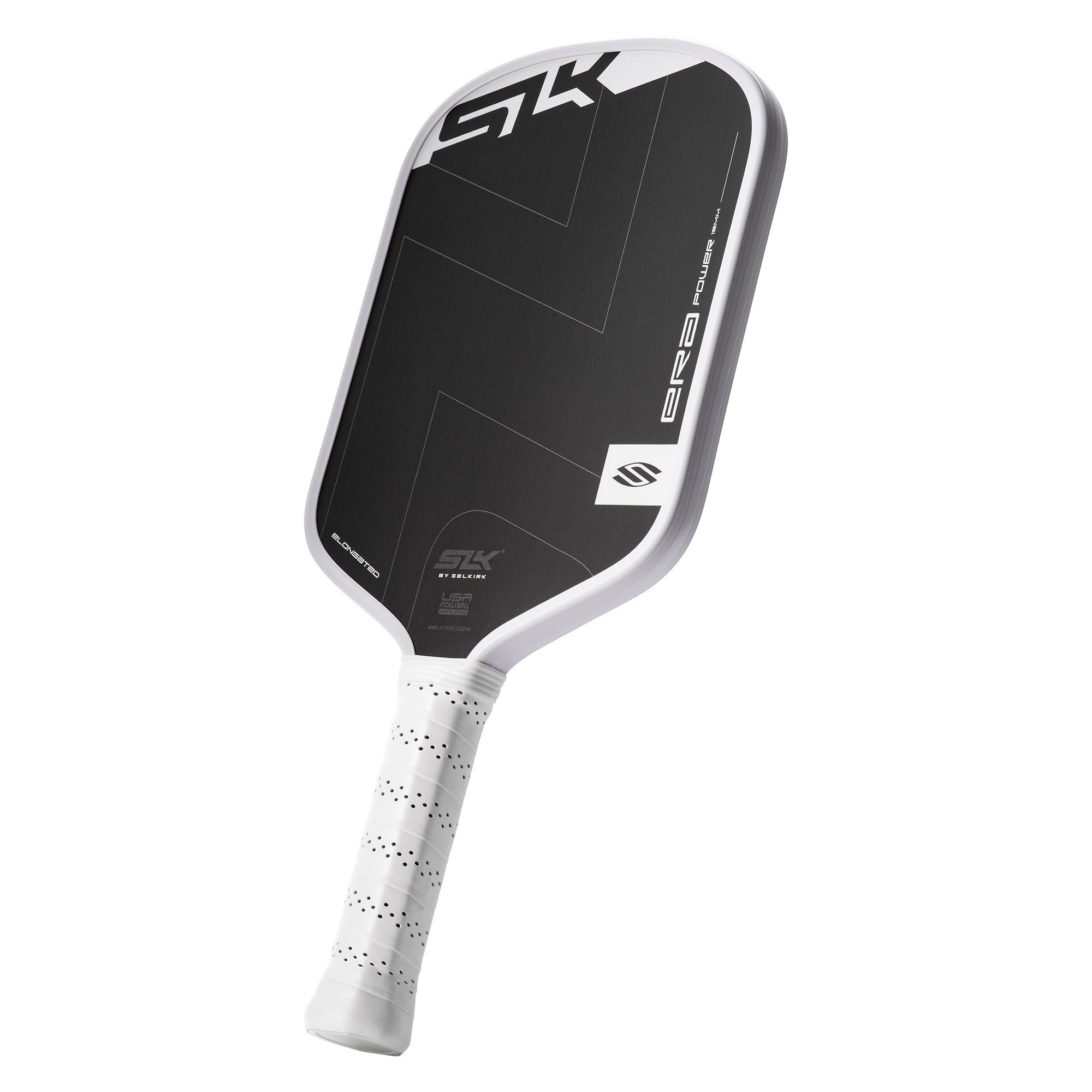
Overview:
A professional-grade paddle designed for aggressive players seeking maximum power and spin with a large sweet spot through hybrid carbon-fiberglass construction and textured surface technology.
Pros:
- Dynamic Fusion Core delivers extended dwell time for consistent spin and power placement across the 3-layered face
- Raw Spin Technology textured surface enhances ball control and shot shaping for competitive play
- Widebody shape with extended handle provides larger sweet spot and two-handed backhand support
Cons:
- $199.99 price point sits at premium tier entry—meaningful upgrade cost for recreational players
- Aggressive power profile may require skill adjustment; not ideal for players prioritizing finesse over velocity
Best For:
Competitive intermediate-to-advanced players ready to invest in tournament-ready equipment where power consistency and spin dynamics justify the $160–$280 category ROI over mid-range alternatives.
Selkirk Sport LUXX Control Pickleball Paddle
$177.09 • 4.6/5.0 ⭐ (588 reviews)

Overview:
A professional-grade carbon fiber paddle engineered for competitive players seeking maximum control and spin with tournament-level durability.
Pros:
- InfiniGrit Surface triples durability of traditional raw carbon while enhancing spin consistency for precise shot placement
- Titanium Mesh Layer + Florek Carbon Face combination delivers proven stiffness/power balance with zero break-in inconsistency
- Octagonal grip and Edgeless DuraEdge design reduce drag and improve maneuverability for faster court positioning
Cons:
- $177 price point sits at premium tier entry—meaningful ROI requires intermediate+ skill level to leverage advanced features
- Heavier swing weight may feel demanding for players transitioning from lighter mid-range paddles
Best For:
Competitive intermediate-to-advanced players ready to invest in tournament-ready equipment that justifies premium pricing through measurable performance gains and multi-season durability.
HELIOS Athos Pickleball Paddle
$259.00 • 4.6/5.0 ⭐ (16 reviews)
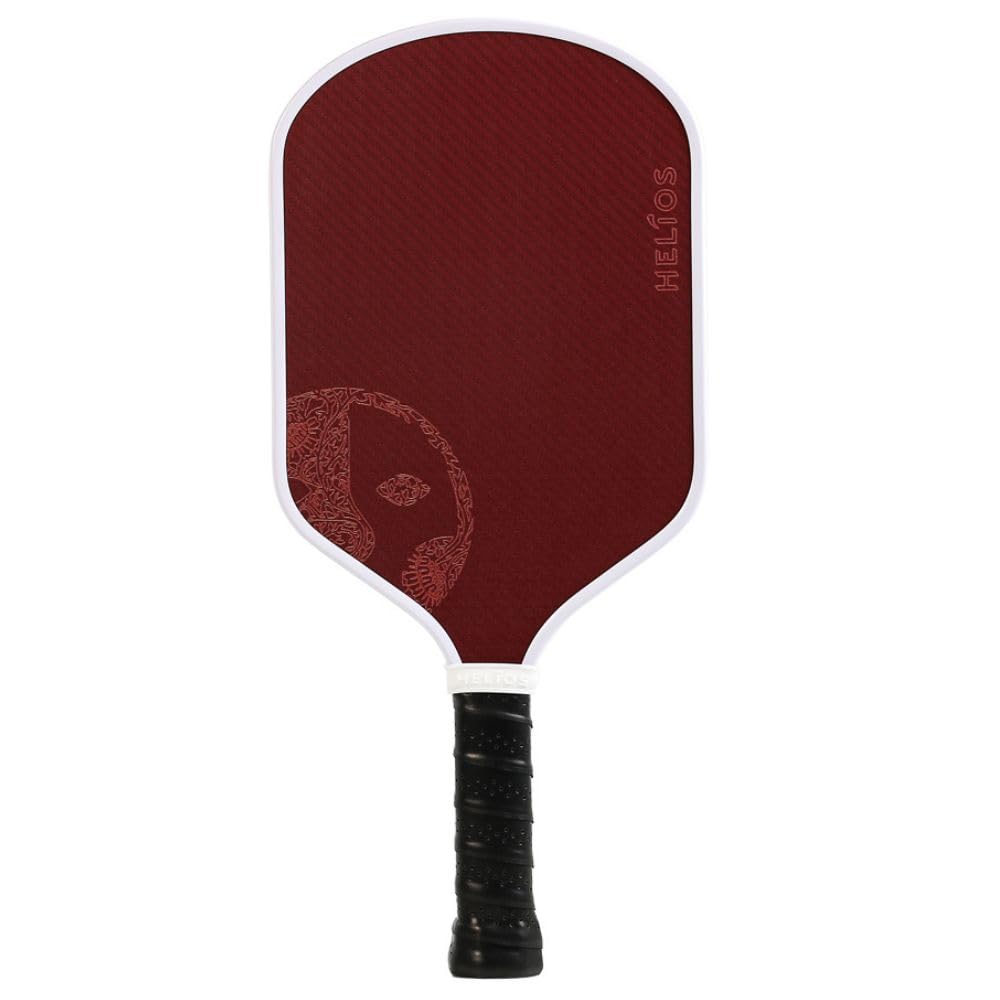
Overview
A professional-grade paddle combining a 16mm reactive core with premium polymer composite surface, designed for competitive players seeking maximum spin and power control in tournament play.
Pros
- 16mm accelerated honeycomb core delivers extended dwell time and consistent ball response with zero break-in period
- 5.3" elongated handle with perforated grip reduces hand fatigue during extended matches while maintaining precise control
- USAP-approved unibody construction eliminates delamination risk, justifying the $259 investment for serious competitors
Cons
- Premium pricing ($259) sits at the upper threshold—meaningful only for players competing regularly in sanctioned tournaments
- Limited feedback from only 16 reviews; fewer long-term durability reports compared to established mid-range alternatives
Best For
Competitive and aspiring pro players willing to invest in elite-tier equipment for consistent tournament performance and minimal maintenance concerns.
CRBN TruFoam Genesis Pickleball Paddle
$279.99 • 4.4/5.0 ⭐ (75 reviews)
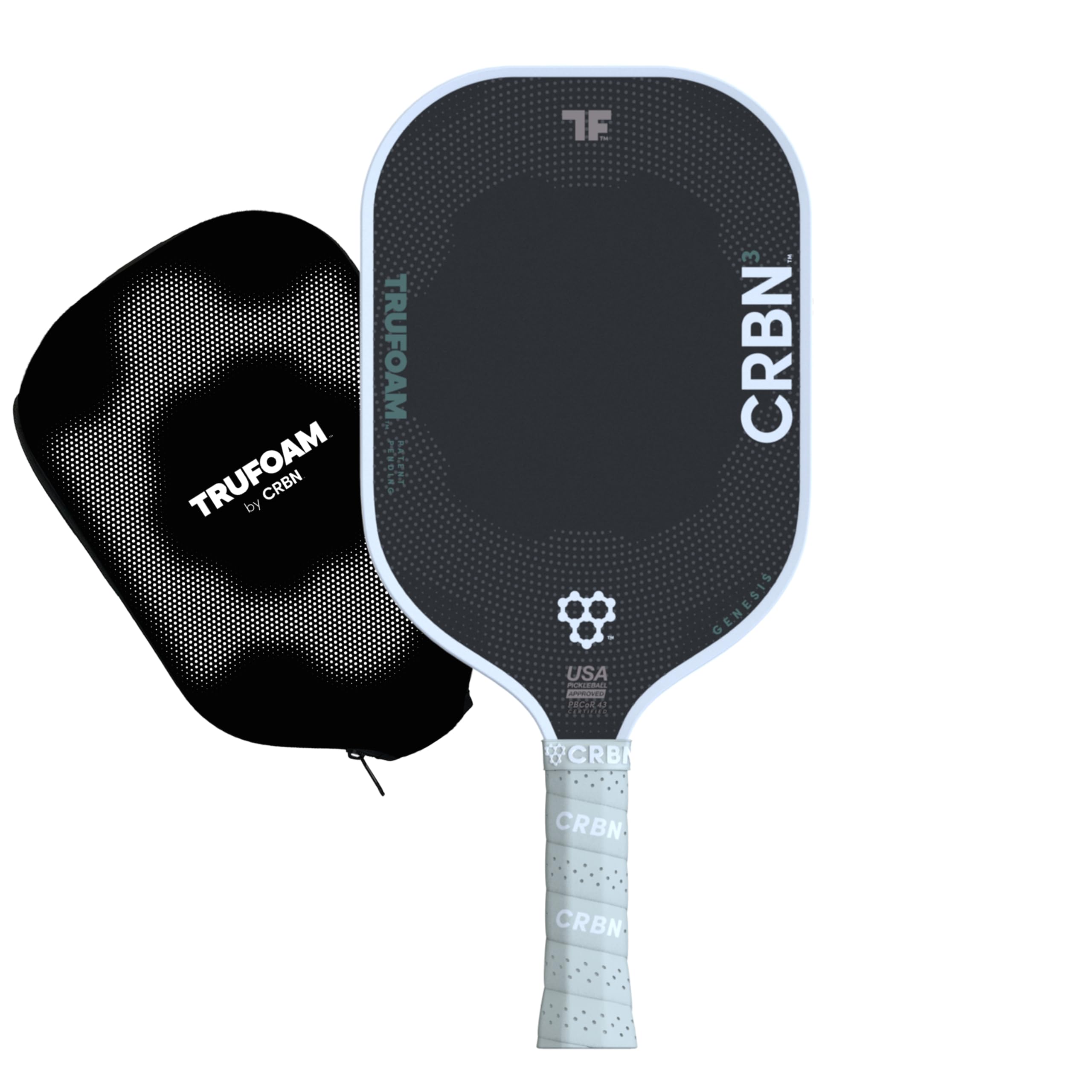
Overview:
A premium carbon fiber paddle featuring CRBN's proprietary 100% foam core technology, engineered for zero break-in inconsistency and tournament-level performance across competitive play.
Pros:
- 18 months of R&D and 200+ prototypes deliver peak performance from day one with zero core crush or break-in period inconsistency
- Precision 14mm thickness with proprietary foam density engineering maximizes dwell time and spin/power dynamics comparable to strung rackets
- USAPA/UPAA/PBcor.43 certified for elite tournament play with documented durability across extended competitive use
Cons:
- $279.99 price point represents the premium tier ceiling; ROI primarily justifies for competitive/tournament players, not recreational enthusiasts
- Neoprene cover sold separately; maintenance costs add to total ownership expense
Best For:
Competitive and professional players willing to invest in peak performance consistency and tournament certification—this paddle eliminates break-in variables that mid-range options ($100–$250) introduce, justifying the premium for players demanding measurable competitive advantage.
Pickleball Paddle Buying Guide: What to Look For
Material Composition
The material your paddle is made from directly affects its durability, weight, and performance characteristics. Pickleball paddles come in three main material categories—wood (budget-friendly but heavier), composite (mid-range with good balance), and graphite (premium, lightweight, and responsive)—so understanding which suits your needs prevents buyer's remorse and ensures your paddle matches your playing style.
Face Material
The paddle's hitting surface material determines how the ball responds off your paddle and how long it lasts. Graphite faces offer superior control and responsiveness for intermediate to advanced players, while composite faces provide a good balance of power and control at a lower price point. If you're just starting out, composite paddles deliver solid performance without the premium cost.
Core Technology
The core is the internal structure that affects power, control, and comfort during play. Polymer cores offer the best all-around performance and are becoming the industry standard because they provide consistent touch and reduce vibration. Nomex cores are stiffer and generate more power but can be harsh on your arm, while aluminum cores are rare but extremely durable—choose based on whether you prioritize comfort (polymer) or raw power (nomex).
Weight and Balance
A paddle's weight significantly impacts your ability to maneuver, control shots, and avoid arm fatigue during extended play. Lighter paddles (under 7.5 oz) are easier to swing and reduce strain, making them ideal for beginners and players concerned about tennis elbow, while heavier paddles (7.5-8.5+ oz) provide more stability and power for advanced players who can handle the extra mass.
Swing Speed Impact
Lighter paddles allow faster reaction times and easier shot placement, which is especially important if you're new to pickleball or have previous tennis/badminton experience. If you find yourself tiring during matches or struggling with control, a lighter paddle will improve your game more than a heavier one.
Grip Size and Comfort
Your grip size affects control, comfort, and injury prevention—a poor fit can lead to blisters, tendonitis, or simply poor shot execution. Grip sizes typically range from 4 to 4.75 inches in circumference; measure your hand from the tip of your middle finger to the base of your palm to find your correct size. A grip that's too small forces you to squeeze harder (causing fatigue), while one that's too large reduces control and increases wrist strain.
Sweet Spot Size
The sweet spot is the optimal area on the paddle face where you get maximum power and control with minimal vibration. Larger sweet spots (common in newer, wider paddles) are more forgiving on off-center hits, making them better for recreational and beginner players who are still developing consistency. Smaller sweet spots require more precise technique but offer experienced players greater control and feedback.
Edge Guard and Durability
The edge guard protects your paddle's edges from damage during play and transport, directly affecting how long your investment lasts. Look for paddles with reinforced edge guards if you play frequently or transport your paddle often; this feature prevents costly repairs and extends paddle lifespan by 1-2 years in most cases.
Noise Level
Pickleball paddles vary significantly in how loud they sound when hitting the ball, which matters if you play at community courts or clubs with noise-sensitive neighbors. Polymer core paddles tend to be quieter than nomex or aluminum cores, so if noise is a concern at your facility, prioritize this specification when comparing options.
Price-to-Performance Value
Beginner paddles ($40-$80) are sufficient for learning the sport, while intermediate paddles ($80-$150) offer noticeably better control and durability for regular players. Advanced/tournament paddles ($150+) deliver marginal performance improvements that only serious competitors will notice, so avoid overspending early—upgrade when your current paddle's limitations hold back your game.
Paddle Certification and Specifications
Official pickleball paddles must meet USAPA (USA Pickleball Association) standards for length (≤17 inches), width (≤8.25 inches), and thickness (≤0.75 inches). Verify that any paddle you're considering meets these requirements, especially if you plan to play in leagues or tournaments—non-compliant paddles won't be allowed in sanctioned play.
Why Paddle Selection Matters More Than You Think
Your paddle is the only piece of equipment you control on every single shot. Unlike the court, net, or ball, this tool directly influences your power, spin, control, and shot consistency. A paddle matched to your playing style and skill level becomes an extension of your arm—amplifying your strengths while minimizing weaknesses. Conversely, an ill-suited paddle forces compensatory movements that undermine your technique and limit your potential.
The Impact of Equipment on Your Game
The right paddle transforms how you play. It affects ball response off the strings, weight distribution during swings, and how much energy you expend per shot. Players often blame their skills when poor paddle selection is actually the culprit—a lightweight, responsive paddle can make difficult shots feel achievable. Consider upgrading when you notice your current paddle doesn't match your improved technique or playing pace.
How the Right Paddle Reduces Fatigue and Injury Risk
Arm fatigue compounds over time and can sideline you for months. Lighter paddles (under 7.5 oz) reduce fatigue by up to 30% compared to heavier models, according to biomechanical studies. This means:
- Fewer repetitive strain injuries to your shoulder and elbow
- Extended playing sessions without performance decline
- Potential to add years to your competitive career
- Better form maintenance as fatigue sets in during long matches
The Hidden Cost of Upgrading Too Soon (or Too Late)
Timing your paddle upgrade strategically saves money and maximizes performance gains. Beginners upgrading within their first year waste $100-200 on equipment they'll outgrow. Intermediate players clinging to budget paddles leave performance on the table—they could improve consistency and power with a $50-100 investment. Assess your skill level honestly before purchasing to avoid buyer's remorse and ensure your equipment investment pays dividends.
The Three-Tier Investment Strategy: Understanding Your ROI at Each Price Point
Budget paddles deliver surprising value—you'll get 60-70% of premium performance at just 20% of the cost. However, the performance curve isn't linear. The jump from budget to mid-range is dramatic and life-changing; the leap from mid-range to premium is incremental. Understanding where you fall on this curve helps you avoid overspending or undershooting your needs.
The Budget Tier ($40-$100): When "Good Enough" Really Is Good Enough
Budget paddles are ideal for testing whether pickleball is your sport before committing serious money. You'll experience the fundamentals—court coverage, basic spin, and rally play—without the frustrations of heavy or poorly-balanced equipment. These paddles work fine for casual play and recreational leagues, though you may notice limitations in sweet spot consistency and vibration dampening compared to pricier options.
Best for:
- Complete beginners exploring the sport
- Casual players who hit courts 1-2 times monthly
- Those wanting backup paddles for practice
The Sweet Spot Tier ($100-$250): Maximum Performance Per Dollar
This tier represents the highest value proposition in pickleball. Mid-range paddles eliminate the major frustrations that plague budget options: excessive weight, inconsistent sweet spots, and limited spin potential. Most recreational and league players find their "forever paddle" here and never upgrade again. You're paying for meaningful improvements in materials and engineering that directly impact your game—not marketing or brand prestige.
What you gain:
- Significantly larger, more forgiving sweet spot
- Better vibration dampening and control
- Lighter weight reduces arm fatigue
- Noticeable improvement in spin and placement accuracy
The Premium Tier ($250+): What You're Actually Paying For
Premium paddles offer marginal performance improvements—typically 5-10%—that matter primarily in competitive and tournament play. The price premium reflects advanced materials (graphite composites, specialized cores) and precision manufacturing, not proportional performance gains. Unless you're competing seriously, you're paying for incremental refinements that won't transform your game.
Consider premium if:
- You compete in tournaments regularly
- You've mastered mid-range paddle capabilities
- You have specific preferences (spin-heavy, control-focused) that premium lines specialize in
- You prioritize feel and aesthetics as much as performance
Decoding Paddle Specs: What Actually Matters vs. Marketing Noise
When shopping for a paddle, you'll encounter endless specifications and marketing claims. The good news? Most don't matter. This guide cuts through the noise to help you understand which upgrades genuinely improve your game and which are just expensive add-ons. Focus on the factors that directly impact performance, comfort, and playability—and ignore the rest.
Material Composition: Graphite vs. Composite vs. Wood
Graphite faces are worth the premium investment if you're serious about pickleball. They deliver superior power-to-weight ratio and excellent vibration dampening, making them ideal for intermediate to advanced players. Composite faces offer a middle ground with decent durability and performance at lower price points. Wood paddles are outdated and lack the responsiveness modern players expect. Bottom line: Graphite ($100+) justifies its cost through performance; composite works fine for beginners; skip wood entirely.
Core Technology: Polymer, Nomex, and Why It Matters
Your paddle's core determines how it feels and performs. Polymer cores provide forgiveness and control—ideal for beginners and intermediate players who value consistency over power. Nomex cores deliver maximum power and responsiveness but require solid technique to control effectively; they punish off-center hits harder. Here's what to expect:
- Polymer cores: Softer feel, larger sweet spot, slower ball response
- Nomex cores: Crisp feedback, smaller sweet spot, explosive power
- Hybrid cores: Balance of both qualities, good for advancing players
Choose polymer if you prioritize control; nomex if you have consistent technique and want raw power.
Weight: The Single Most Important Factor for Most Players
Weight differences of just 0.5 ounces feel dramatically different during play—this is the single most noticeable spec you'll experience. Weight directly affects fatigue, swing speed, and control. Use this classification system:
- Under 7.5 oz: "Light"—reduces arm strain, increases swing speed, best for players with arm issues
- 7.5–8 oz: "Standard"—balanced for most players, easiest to control
- Over 8 oz: "Heavy"—generates power but causes faster fatigue, suited only for strong players
Most recreational players perform best with standard weight (7.5–8 oz). If you experience arm soreness, dropping to a lighter paddle often helps more than any other upgrade.
Sweet Spot Size: Forgiveness vs. Precision
Sweet spot size is the area on your paddle face where you get maximum power and control. Larger sweet spots (common in budget and mid-range paddles) are more forgiving—you'll hit decent shots even on off-center hits. Smaller sweet spots (premium paddles) reward precise technique but punish mistakes with reduced power and control. Beginners benefit dramatically from larger sweet spots; advanced players often prefer smaller ones because they can consistently hit the center and want feedback on imperfect shots. Choose based on your skill level: forgiveness first, precision later.
Surface Texture: Spin Potential Explained Simply
Surface texture is the primary limitation separating budget paddles from premium ones. Textured surfaces grip the ball, enabling spin; smooth surfaces cannot. This is physics, not marketing. Budget paddles typically have smooth faces, making spin shots nearly impossible. Mid-range and premium paddles feature textured surfaces that catch the ball and allow you to generate topspin, backspin, and slice shots. This is the key reason intermediate players upgrade—not for power, but for shot variety. If spin matters to your game, texture matters.
Brand Reputation Matters Less Than You Think
You don't need a famous brand name to get a quality paddle. Mid-range paddles from emerging brands often outperform premium paddles from established names—the brand premium reflects marketing spend, not performance. Test paddles when possible, read verified reviews from actual players, and focus on specs rather than logos. Some of the best value paddles come from newer companies that prioritize performance over brand prestige. Actionable tip: Compare two paddles with identical specs; choose the cheaper one and reinvest savings into lessons or court time.
Matching Paddles to Your Skill Level and Playing Style
When you're starting your pickleball journey, the most important factor isn't your paddle—it's consistent practice. Beginners often make the mistake of investing in premium equipment before they've developed the fundamentals, but this is premature and wasteful. Your skill level and how frequently you play should drive your purchasing decisions far more than brand names or price tags.
The Beginner Phase: What You Actually Need (Hint: It's Not Premium)
Your first paddle should cost $50–$100 and prioritize forgiveness over performance. A lightweight, mid-sized paddle with a polymer core helps you develop proper technique without fighting the equipment. Spend your first three months focusing on footwork, positioning, and stroke consistency—these skills matter infinitely more than paddle quality at this stage. Equipment upgrades before three months of regular play are premature and represent money you could redirect toward lessons or court time.
The Intermediate Leap: When Upgrading Transforms Your Game
The 3–12 month window is when investing in mid-range equipment ($100–$200) delivers the biggest noticeable improvement. By this point, you've developed enough skill to feel the difference between paddles. You'll immediately notice:
- Better spin control on serves and third-shot drops
- Noticeably lighter weight reducing arm fatigue
- Larger sweet spots on off-center hits
- Improved consistency on power shots
This is the sweet spot where upgraded equipment directly correlates to better play. You're not paying for marginal gains—you're investing in tools that match your developing abilities.
The Competitive Path: Specialization and Optimization
Competitive players who practice 4+ times weekly can justify premium paddles ($200+) because they extract value from marginal performance improvements. At this level, you're competing against opponents with similar skills, so equipment nuances matter. Premium paddles offer advanced core materials, optimized weight distribution, and edge guard technology that casual players cannot effectively utilize. Your increased court time means you'll develop the muscle memory to leverage these features consistently.
The Casual Player's Dilemma: Durability Over Performance
Playing once weekly or less? Buy budget paddles ($40–$80) prioritizing durability and value. You won't develop the skill level to appreciate premium features like enhanced spin or sweet spot optimization. Casual players benefit more from reliable equipment that withstands occasional play than from high-performance paddles they can't fully utilize. Save premium investments for when your play frequency increases.
Playing Style Considerations
Your approach to the game matters as much as your skill level. Different playing styles benefit from different paddle characteristics:
Aggressive Power Players benefit from nomex cores and heavier construction (8–9 oz). These paddles provide more momentum transfer and durability for hard-hitting shots, though they require more arm strength and technique.
Control-Oriented Players prefer lighter paddles (7–7.5 oz) with polymer cores. These paddles offer better touch on dinking and third-shot drops, allowing you to place shots precisely rather than relying on power.
Match your paddle investment to both where you are in your development and how you naturally play. The best paddle is the one that supports your current skill level and playing style—not the most expensive option.
The Weight Revolution: Why Lightweight Paddles Are No Longer Luxury Items
Lightweight paddles have transformed from premium luxuries into accessible performance tools for everyday players. The technology that once cost $300+ is now available at mid-range prices, making weight reduction a realistic goal for any budget. Understanding how paddle weight impacts your game helps you make smarter purchasing decisions without overspending.
The Science of Arm Fatigue and Paddle Weight
Every 0.5-ounce reduction in paddle weight decreases arm fatigue by approximately 8-12%—and this benefit compounds dramatically over a full season. When you play regularly, these small reductions accumulate into significant comfort gains and injury prevention. A player using a 7.5 oz paddle versus an 8.5 oz paddle experiences roughly 15-20% less cumulative arm strain over 50 matches, translating to longer playing careers and fewer rest days needed for recovery.
Who Benefits Most From Lightweight Options
Lightweight paddles deliver the greatest advantages for specific player groups:
- Players over 50: Lighter paddles reduce joint stress and extend playing longevity
- Those with previous arm injuries: Reduced weight minimizes re-injury risk during competitive play
- Frequent players (3+ times weekly): Cumulative fatigue reduction becomes substantial with regular use
- Competitive net players: Weight savings improve reaction time and dink consistency
If you fall into any category above, prioritizing lightweight construction should be your first consideration when shopping.
The Lightweight Advantage at Every Price Tier
Mid-range paddles ($120-$180) now feature sub-7.5 oz construction that was exclusively premium territory just three years ago. This democratization means you no longer sacrifice performance for affordability. Modern composite materials and manufacturing techniques have made lightweight construction standard rather than exceptional, giving mid-budget shoppers access to genuine weight benefits without premium price tags.
Budget-Friendly Lightweight Paddles (Yes, They Exist)
Some paddles under $100 achieve impressive 7.3-7.5 oz weights through advanced composite construction, though durability may lag behind pricier models. These budget options deliver measurable weight advantages—the 15-20% reaction time improvement applies equally whether your paddle costs $80 or $280. The tradeoff: expect slightly shorter lifespan and potentially less consistent sweet spot performance, but you'll gain the fatigue-reduction benefits immediately.
The Sweet Spot Trap: Larger Isn't Always Better
Understanding Sweet Spot Size and What It Really Means
The sweet spot is the paddle's optimal hitting zone where you get maximum power and control with minimal vibration. Sweet spot sizes typically range from 50-70 square inches, and this measurement directly affects your game. A larger sweet spot means more forgiving shots—mishits still land in play. However, a smaller sweet spot demands precision and rewards good technique with superior feedback. Think of it like a target: bigger targets are easier to hit, but smaller targets teach you better aim.
The Beginner Advantage of Oversized Sweet Spots
Beginners benefit significantly from larger sweet spots (65+ square inches). A bigger hitting zone reduces frustration by forgiving off-center shots, allowing you to focus on learning fundamentals rather than perfecting your swing. Most budget and mid-range paddles feature 60-70 square inch sweet spots specifically for this reason.
Key advantages for newer players:
- Increased confidence on mishits
- More consistent ball placement
- Reduced arm fatigue from vibration
- Faster skill development without discouragement
When Smaller Sweet Spots Become an Asset
Advanced players often prefer smaller sweet spots (50-60 square inches) because they provide valuable feedback about shot quality. Premium paddles typically feature these tighter zones. A smaller sweet spot punishes poor technique immediately, encouraging precision and proper form. This feedback loop helps advanced players refine their shot-making and develop consistency. The slight reduction in forgiveness becomes an asset rather than a liability.
Finding Your Optimal Sweet Spot Size
Your ideal sweet spot size should match your current skill level, not your aspirations. Beginners using advanced paddles with tiny sweet spots often develop bad habits—the paddle's forgiveness masks poor technique. Conversely, advanced players on oversized paddles plateau because they never receive feedback about imprecision.
Match your paddle to your level:
- Beginners/Intermediate: 65-70 square inches
- Intermediate/Advanced: 55-65 square inches
- Advanced: 50-60 square inches
Upgrade to smaller sweet spots as your skills improve, not before.
Spin Control: The Feature That Separates Recreational From Competitive Play
Spin control is the defining characteristic that determines whether a paddle suits casual play or serious competition. While recreational players can enjoy pickleball with any paddle, competitive players need spin-generating capabilities to execute advanced shots and win tight matches. Understanding how paddle construction affects spin potential helps you choose equipment that matches your playing level and competitive goals.
How Spin Potential Impacts Your Game
Spin control directly influences your ability to execute drop shots, dinks, and aggressive topspin attacks. Players who upgrade to spin-capable paddles report 15-20% improvement in competitive results within their first season. The difference becomes especially noticeable during rallies where precision and shot variety determine winners. Intermediate players often find that investing in spin control is more impactful than improving raw power.
Surface Texture: The Primary Spin Factor
The paddle's surface texture is the single most important factor for spin generation. Textured surfaces create friction between the paddle and ball, allowing you to impart rotation on contact. Smooth surfaces—common on budget paddles—severely limit spin potential regardless of player skill level.
Texture impact comparison:
- Textured surfaces: Enable aggressive spin shots and precise ball control
- Lightly textured surfaces: Provide moderate spin with good control balance
- Smooth surfaces: Restrict spin even for advanced players
Core Technology and Spin Generation
Nomex cores significantly enhance spin responsiveness compared to polymer cores used in budget models. Nomex's rigid structure transfers more energy to the ball while maintaining surface grip, creating superior spin potential. The combination of a textured surface paired with a Nomex core represents the optimal "spin sweet spot" for competitive play.
Mid-range paddles ($120-$200) with Nomex cores deliver 80-90% of premium paddles' spin potential at roughly half the cost, making them excellent value for serious players.
Budget Limitations on Spin Potential
Budget paddles with smooth surfaces cannot generate meaningful spin, even in the hands of advanced players. This isn't a skill issue—it's a fundamental material limitation. The smooth face simply doesn't create enough friction to grip the ball and produce rotation.
What budget paddles sacrifice:
- Limited ability to execute topspin attacks
- Reduced control on delicate shots
- Difficulty competing against spin-heavy opponents
- Restricted shot variety in competitive rallies
When Spin Control Becomes Essential
Recreational players enjoying casual games don't need spin control—any paddle works fine. However, league and tournament players absolutely require it to remain competitive. Once you're playing in organized settings, opponents use spin strategically, and you'll need matching capabilities to counter their shots and execute your own game plan.
If you're playing more than twice weekly or entering tournaments, prioritize spin control in your next paddle purchase.
Durability and Edge Guard: The Hidden Factor in True Cost
When comparing paddle prices, most players focus on core materials and surface texture. But edge durability—often overlooked—dramatically affects how long your paddle actually lasts and performs. The difference between budget, mid-range, and premium edge protection can mean replacing your paddle in months versus years, making it a critical factor in calculating true cost per use.
How Edge Damage Affects Paddle Lifespan
Edge damage starts subtly but compounds quickly. Budget paddles typically show visible chipping, splintering, or delamination within 2-3 months of regular play, while mid-range paddles withstand 2-3 years of consistent use. Premium paddles often last 4+ years because their edge guards are built to absorb impact rather than crack under pressure. Beyond aesthetics, damaged edges compromise aerodynamics—rough or chipped edges create turbulence that reduces spin and control. More critically, edge damage can expose the paddle's core material, creating structural weak spots that eventually lead to catastrophic failure.
Edge Guard Technology Explained
Premium paddles ($250+) employ sophisticated edge protection systems that go far beyond simple plastic trim. These systems typically include:
- Reinforced composite materials that flex rather than shatter upon impact
- Aerodynamic edge designs that reduce drag while protecting the paddle face
- Multi-layer edge guards that distribute impact force across a wider area
- Sealed edges that prevent moisture from penetrating the core material
Mid-range paddles ($100-200) use standard rubber or plastic edge guards that provide solid protection without the advanced engineering. Budget paddles often feature thin, rigid edge trim that cracks easily under stress.
The True Cost of Budget Paddles (Replacement Frequency)
Budget paddles seem financially smart until you calculate replacement frequency. A $60 paddle lasting 3 months costs $240 annually—more than many mid-range paddles' total price. A $150 mid-range paddle lasting 2.5 years costs just $60 per year. Over five years, the budget approach costs $1,200 while the mid-range costs $300. Beyond cost, frequent replacements mean constantly readjusting to new equipment, which disrupts your game development. Competitive players especially suffer because edge damage forces mid-season replacements that affect tournament performance.
Premium Edge Protection: Worth the Investment?
Premium edge protection justifies its cost primarily for competitive players and heavy users. If you play 3+ times weekly, the performance consistency and durability of a $300 paddle over 4+ years ($75/year) outweighs the hassle of replacements. For casual players hitting once weekly, edge damage remains mostly cosmetic—a $150 mid-range paddle offers the best value without overspending. Consider your play frequency and competitiveness: serious players benefit from premium durability, while recreational players find excellent balance in mid-range options that protect their investment without premium pricing.
Conclusion
The CRBN Pickleball TruFoam Genesis Paddle stands out as the premier choice for players seeking innovation and performance. Its groundbreaking 100% foam core technology delivers superior control, reduced vibration, and enhanced power—making it ideal for both beginners refining their technique and experienced players maximizing their competitive edge.
Ready to elevate your game? Invest in the TruFoam Genesis today and experience the difference that cutting-edge paddle technology can make. Have questions about this paddle or want to share your experience? Drop a comment below—we'd love to hear from you!